Lifting and bending all day tires workers and slows lines. A hydraulic scissor lift table brings the load to working height at the press of a button. Here is how it helps and what to specify.
Where lift tables help
- Assembly lines: keep work at a steady, comfortable height.
- Packing stations: raise pallets as boxes are removed.
- Workshops: feed heavy parts and tools to machines.
- Loading bays: move goods between floor and vehicle level.
Benefits
- Less bending and lifting by workers.
- Faster, steadier work.
- Smooth movement under load.
- Built to the size your line needs.
Options to specify
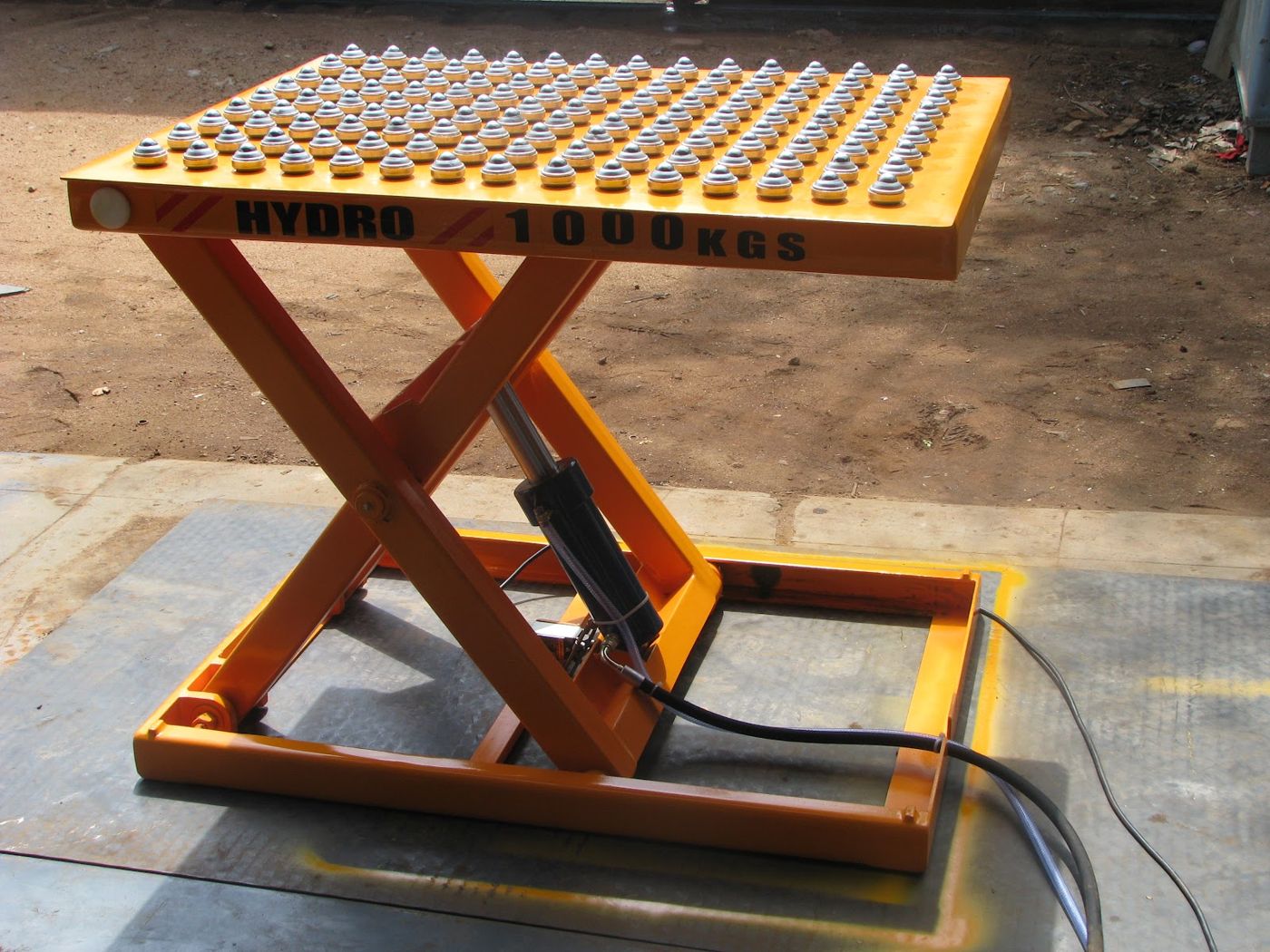
- Platform size and surface, such as plain or roller top.
- Capacity and travel.
- Foot pedal, push-button or remote control.
- Rails or guards.
- Pit or floor mounting.
- Mobile base with wheels.
Safety
Ask for a safety lock, emergency stop, limit switches and a skirt or guard to keep feet clear of the arms.
Good practice on the line
- Mark the platform edge so workers know the clear area.
- Keep hands and feet away from the arms.
- Do not exceed the rated load.
- Train operators on the controls and emergency stop.
Maintenance
Check oil level, hoses and pivots on a regular schedule. A table that runs every day needs more frequent checks than one used weekly.
Example uses in an Indian workshop
- Raising engine blocks or gearbox casings to a fitter's working height.
- Lifting dies to a press bed.
- Bringing pallets of boxes to a packing table.
- Lowering finished goods to trolley height for dispatch.
How to start
- Photograph the station and measure the available space.
- Weigh the heaviest item with its pallet.
- Note the height you want the work at.
- Choose controls and options.
- Send the details to Hydro Fabs for a quote.
Even one lift table at a bottleneck station often changes the pace of the whole line.
Next step
Read how to size a scissor lift table and the hydraulic scissor lift range, then request a quote.