A hydraulic scissor lift combines two simple ideas: crossed steel arms and pressurised oil. Together they lift heavy platforms smoothly and fold back low. Knowing the parts helps you read a quotation and ask better questions.
The main parts of a hydraulic scissor lift
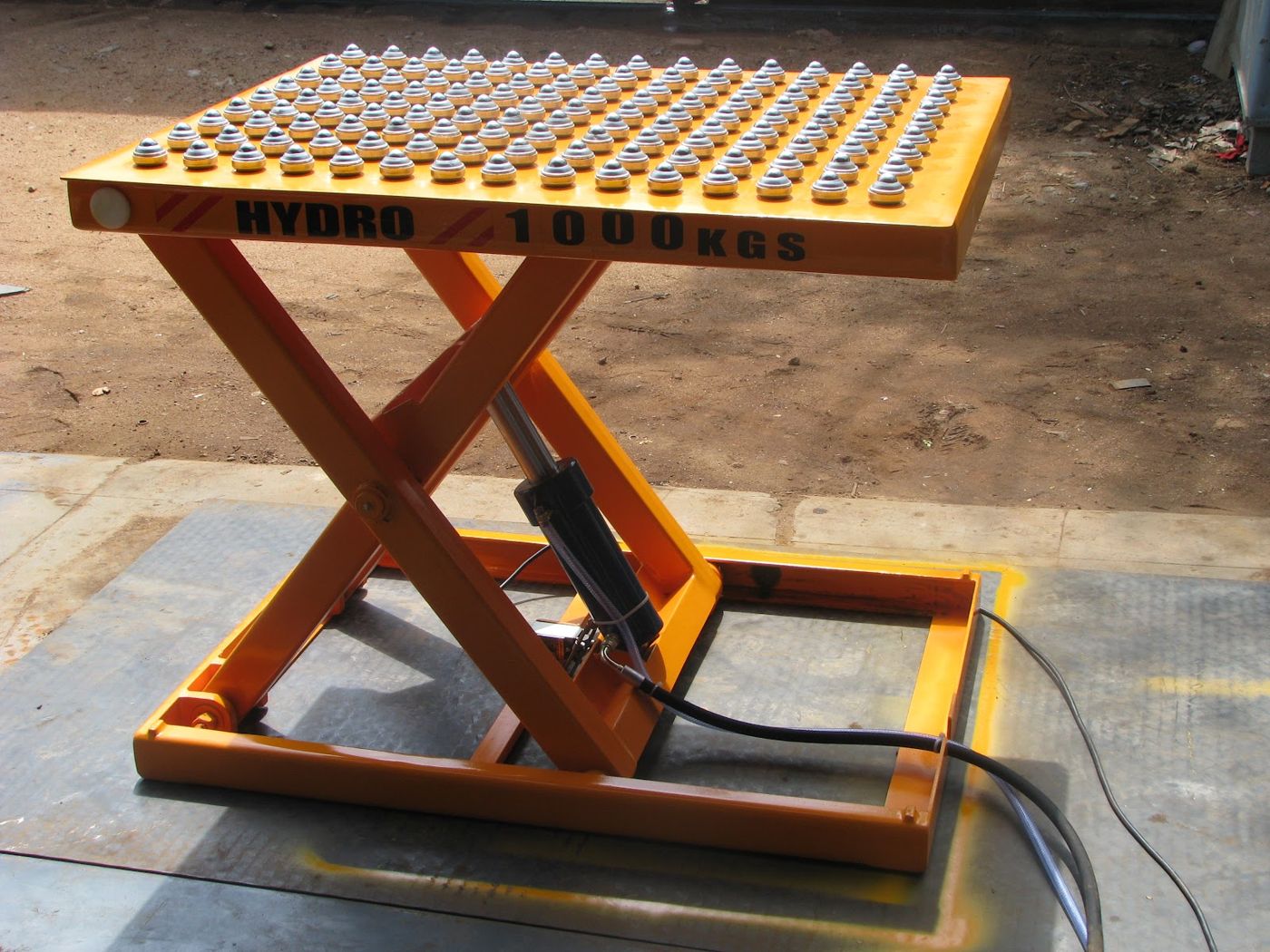
- Platform: the steel deck that carries the load. Size and strength are set by the job.
- Scissor arms: crossed steel legs that open and close as the platform moves.
- Hydraulic cylinders: push the arms. Heavier loads and greater heights need stronger cylinders.
- Power pack: motor, pump, oil tank and valves that supply and control the oil.
- Control panel: up and down buttons, emergency stop and limit switches.
- Base frame: carries the whole machine and is fixed to the floor or a pit.
How it works step by step
- The operator presses the up button and the motor starts the pump.
- Oil flows into the cylinders and pushes the arms open.
- The platform rises evenly to the set height.
- On down, a valve releases the oil back to the tank and the weight lowers the platform at a controlled speed.
Industrial uses
Factories use them to load trucks, feed machines, lift dies and tools, and bring work to a comfortable height. Warehouses use them at docks. Custom versions add hydraulic flaps, rotating platforms and long decks. See the hydraulic scissor lift range.
Why custom design matters
A catalogue size rarely matches a real site. Hydro Fabs designs each scissor lift for the customer's load, platform size and closed and raised heights, in its own factory in Bommanahalli, Bengaluru. For cost drivers, see scissor lift price in India.
Fault signs worth acting on
- The platform rises slowly or unevenly, which may mean low oil or a worn seal.
- The platform sinks when stopped, which points to a valve or seal leak.
- Unusual noise from the pump or arms.
- Oil on the floor around the cylinders or hose joints.
Stop using the lift, lower it if safe to do so and call service. Small leaks fixed early cost far less than a failed cylinder.
Design choices that affect life
Steel thickness, pivot pins and bushes, the number of cylinders and the quality of hoses decide how long a lift lasts under daily use. Ask the manufacturer how the design handles your duty cycle, not only your peak load.
Why the arms and cylinders are designed together
The cylinders do not push straight up. They push the arms at an angle, and the force needed changes as the arms open. A lift designed well places the cylinders so the load is carried smoothly through the whole travel, and sizes the pivot pins for the heaviest point. This is why a lift for a long truck platform cannot be shrunk down from a small table design.
Typical custom options
- Hydraulic flaps that bridge from the platform to a truck bed.
- Rotating or tilting platforms for positioning work.
- Roller or turntable decks for moving heavy items.
- Safety rails and toe guards where people work on the platform.
- Remote or pendant controls for operator comfort.
- Coatings for outdoor or damp conditions.
Each option changes the structure, so tell the manufacturer early. Hydro Fabs built a 10 m long platform with an automatic hydraulic flap for Terex India, a clear case where a custom design was the only workable answer.
Care and maintenance
Check oil level and look for leaks regularly, grease the pivots and inspect hoses and fittings every few months. A service contract keeps the lift reliable.