
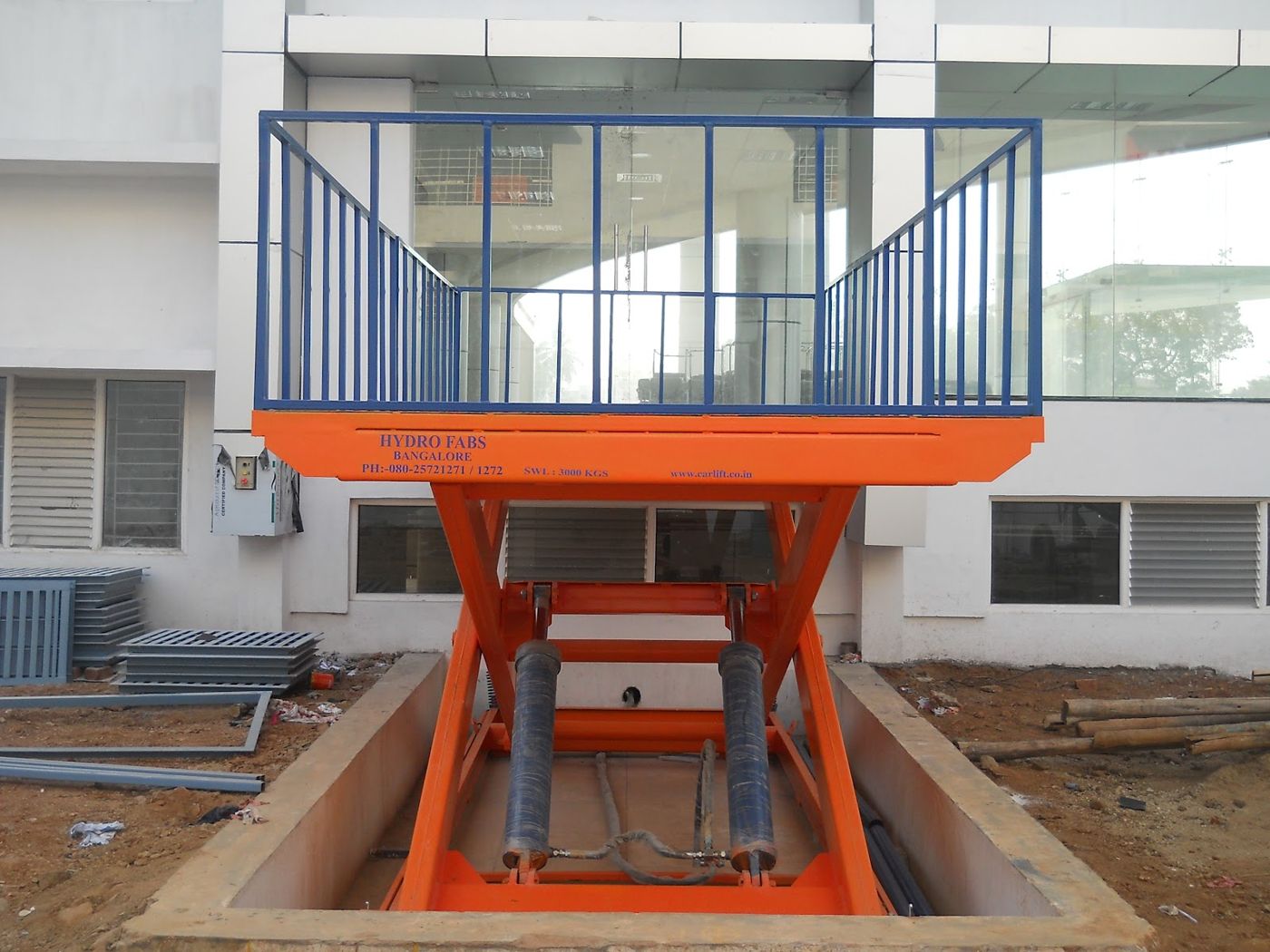
A goods lift carries materials, not people, between floors. Factories, warehouses, malls and shops use them to stop carrying heavy loads up stairs. This guide covers the types, how to size one and where it fits.
What is a goods lift
A goods lift is a platform or car that moves cargo vertically through a shaft or along a guide frame. It is built for loads, with a strong floor and simple controls. A hydraulic goods lift uses oil pressure to do the lifting, which suits low and medium travel.
Types of goods lift
- Enclosed goods lift: runs inside a shaft with doors at each floor.
- Open platform goods lift: a guarded platform for factory floors and loading areas.
- Pit type and non-pit type: with a pit, the platform sits flush with the floor; without one, a short ramp is needed.
- Heavy-load lift: built for machinery and pallets. Hydro Fabs has delivered a 5-ton goods lift for Marble Centre International.
How to size a goods lift
- Weigh the heaviest load, with its trolley or pallet.
- Measure the largest item to set the platform length and width.
- Count the floors and measure the travel height.
- Decide how loads enter: one side, opposite sides or at right angles.
- Note how many trips per hour you expect.
Where goods lifts work best
Warehouses linking a ground floor to a mezzanine, factories moving parts between levels, malls feeding stock rooms and shops with an upper storeroom all benefit. If you are weighing options, our guide to hydraulic goods lift vs electric lift helps.
Site requirements
- A level, strong floor or foundation to carry the lift and load.
- Shaft or guard frame around the travel path.
- Clear access at each landing for trolleys or forklifts.
- A power supply and a place for the power pack.
Operating tips
- Post the rated load at every landing.
- Keep landing doors or gates closed while the lift moves.
- Do not let people ride a goods lift unless it was designed for it.
- Service it regularly, since a stopped lift stops the whole material flow.
Open platform or enclosed: how to decide
An open platform inside a guarded area is simple and suits a factory where staff are trained and the area is controlled. An enclosed lift with doors at each landing suits shops, malls and offices where the public may be near. Enclosure also protects goods and keeps noise and dust down. Local rules and your insurer may influence the choice, so confirm requirements before you finalise.
Real use cases
- A tile and stone dealer moving slabs from a basement store to a showroom.
- A factory lifting parts from a ground-floor machine shop to an upper assembly floor.
- A warehouse linking a loading bay to a mezzanine stock area.
- A restaurant or hotel moving supplies from a basement store to upper floors.
In each case the lift is sized to the heaviest realistic load, not the average, because that is the load that decides the structure.
Keep it a goods lift
Label it clearly for materials only. If people must ride, tell the manufacturer at the design stage because the safety requirements are different.