A hydraulic lift moves a platform up and down using pressurised oil instead of ropes and counterweights. That one idea sits behind scissor lifts, goods lifts, dumb waiters and car lifts. This guide explains what a hydraulic lift is, the main types sold in India and how to match one to your site.
What a hydraulic lift does
A pump pushes oil into a cylinder. The oil forces a piston to rise, and the piston raises the platform. To lower the platform, a valve lets the oil flow back to the tank at a controlled speed. The method relies on Pascal's law: pressure applied to a fluid in a closed system acts equally in every direction. For the working parts in detail, read how a hydraulic lift works.
Main types of hydraulic lift
- Scissor lift: crossed arms fold and open to raise a platform. Used in loading docks, assembly lines and maintenance. See the hydraulic scissor lift.
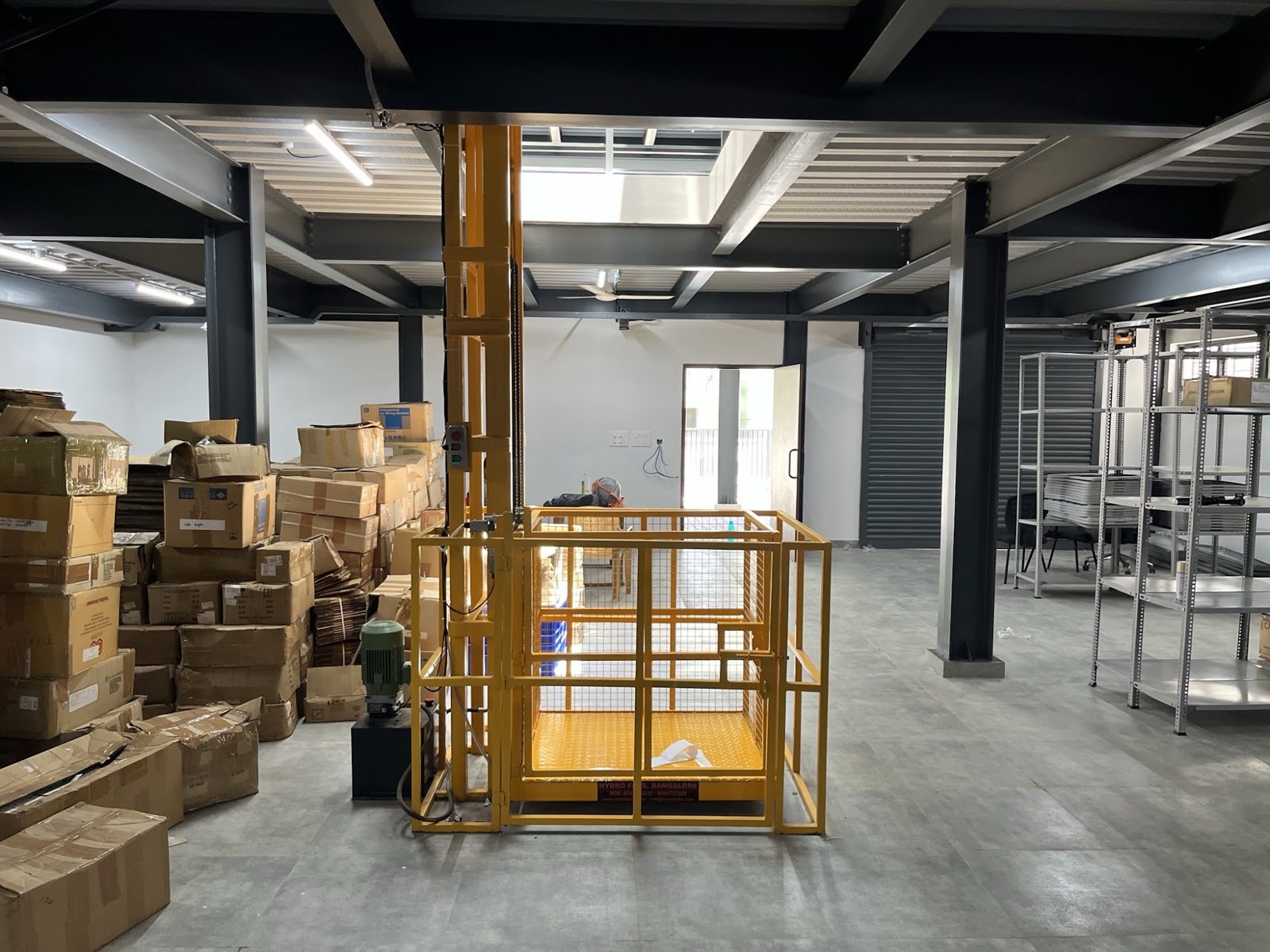
- Goods lift: a platform that carries materials between floors in factories, warehouses and malls. See the hydraulic goods lift.
- Dumb waiter: a small lift for food, files and parcels. See the dumb waiter.
- Car lift and car elevator: lifts built for vehicles, for villas, apartments, showrooms and service bays. See the car elevator.
Where hydraulic lifts are used
Factories use them to move raw material and finished goods. Restaurants and hospitals use dumb waiters. Showrooms use car lifts to display vehicles on an upper level. Homes use them to save floor space in a garage or to send items between floors. Hydro Fabs has built lifts for customers such as Terex India and Ain Dubai; see the projects.
Why buyers choose hydraulic over other lifts
- Simple mechanism with few moving parts.
- Smooth lifting of heavy loads from a compact machine.
- Suits low and medium travel, where a full traction elevator is not needed.
- Can be custom built to the load, platform size and lift height.
Parts of a hydraulic lift at a glance
- Power pack: motor, pump, oil tank and control valves.
- Cylinder and piston: convert oil pressure into lifting force.
- Platform or car: carries the load.
- Guides or arms: keep the platform steady as it moves.
- Controls and safety devices: buttons, limit switches, emergency stop and locks.
Common mistakes when buying
- Choosing by price alone, without matching the load and platform size.
- Forgetting the pit, shaft or power supply the lift needs.
- Ordering a goods lift where people will ride, or a car lift too small for an SUV.
- Skipping a service plan, then facing breakdowns.
Avoid these by sharing full details with the manufacturer at the start. A short site visit by an engineer settles most doubts before any steel is cut.
How a hydraulic lift compares with other ways to lift
A hoist or crane lifts from above and needs a structure to hang from. A rope lift uses a motor, ropes and a counterweight, and usually needs a machine room. A hydraulic lift pushes from below with a cylinder, so the load is carried by the cylinder and the guides rather than by cables. That makes it a natural fit for heavy, slow, short-travel work such as goods, vehicles and platforms.
Because the lifting force comes from oil pressure, speed is steady and starting and stopping are smooth. This matters when you move fragile loads such as stone slabs, machine parts or cars.
From enquiry to installed lift
- You share the load, size, height and site with the manufacturer.
- An engineer proposes a design and sends a quotation.
- After approval, the lift is fabricated in the factory.
- The lift is delivered, installed and tested at your site.
- Your team is shown how to operate it, and a service plan begins.
Hydro Fabs follows this path for each lift, so the machine arrives matched to the job rather than adapted after delivery.
How to choose the right hydraulic lift
Start with four facts: the heaviest load, the platform size, the travel height and where the lift will stand. Add whether it will be indoors or outdoors and how often it will run. Every Hydro Fabs lift is custom built to these details, with pan-India delivery, installation and service.