A hydraulic goods lift raises cargo with oil pressure rather than ropes. Its simplicity and strength suit factories and warehouses. Here is how it works, how to pick capacity and where it earns its place.
How it works
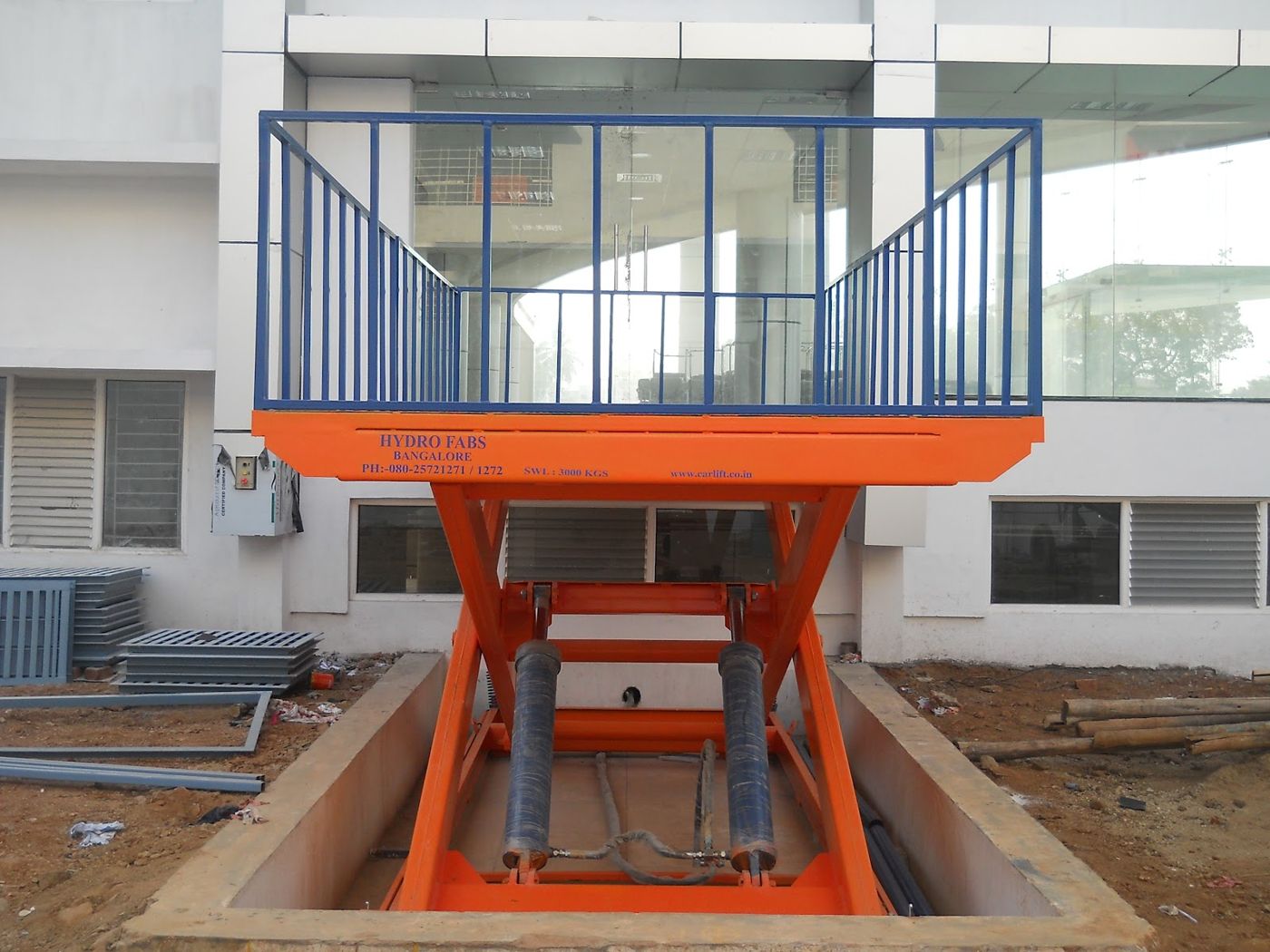
The power pack pumps oil to one or more cylinders. The cylinders raise the platform along a guide frame. A valve releases oil to lower it. See the full explanation in how a hydraulic lift works.
Choosing the capacity
- Weigh the heaviest load, including pallet or trolley.
- Add a margin for future use.
- Tell the maker about loading by forklift, as impact loads matter.
- Confirm the rating covers the platform's full size.
Hydro Fabs goods lifts start from 500 kg and are built to the load.
Applications
- Factories moving parts and finished goods between levels.
- Warehouses linking floors and mezzanines.
- Malls and shops bringing stock to storerooms.
- Stone and tile sellers handling heavy slabs.
Advantages
- Strong lifting at modest running cost.
- Few moving parts to maintain.
- Made to size.
- Suitable for low and medium travel.
Safety devices to look for
- Mechanical locks or props for maintenance.
- Pipe burst valve.
- Overload relief valve.
- Limit switches and emergency stop.
- Interlocked landing gates.
Operating and care tips
Keep loads centred, load slowly and keep the travel path clear. Check oil level and hoses regularly and book service before problems show.
How capacity and platform size work together
A load spread across a large platform puts less stress on one spot than the same load on a small area. The rated capacity assumes a given load position, so tell the manufacturer how the load sits, for example a pallet, a machine on skids or a forklift driving on. Point loads and forklift entry need a stronger deck than evenly spread boxes.
Typical workflow
- Load the platform at the lower landing.
- Close the gate or door.
- Press the call button to lift.
- The platform stops at the upper landing.
- Open the gate and unload.
Staff trained in this routine use the lift safely and keep goods flowing.
Next step
Read goods lift types and sizes and see the hydraulic goods lift.